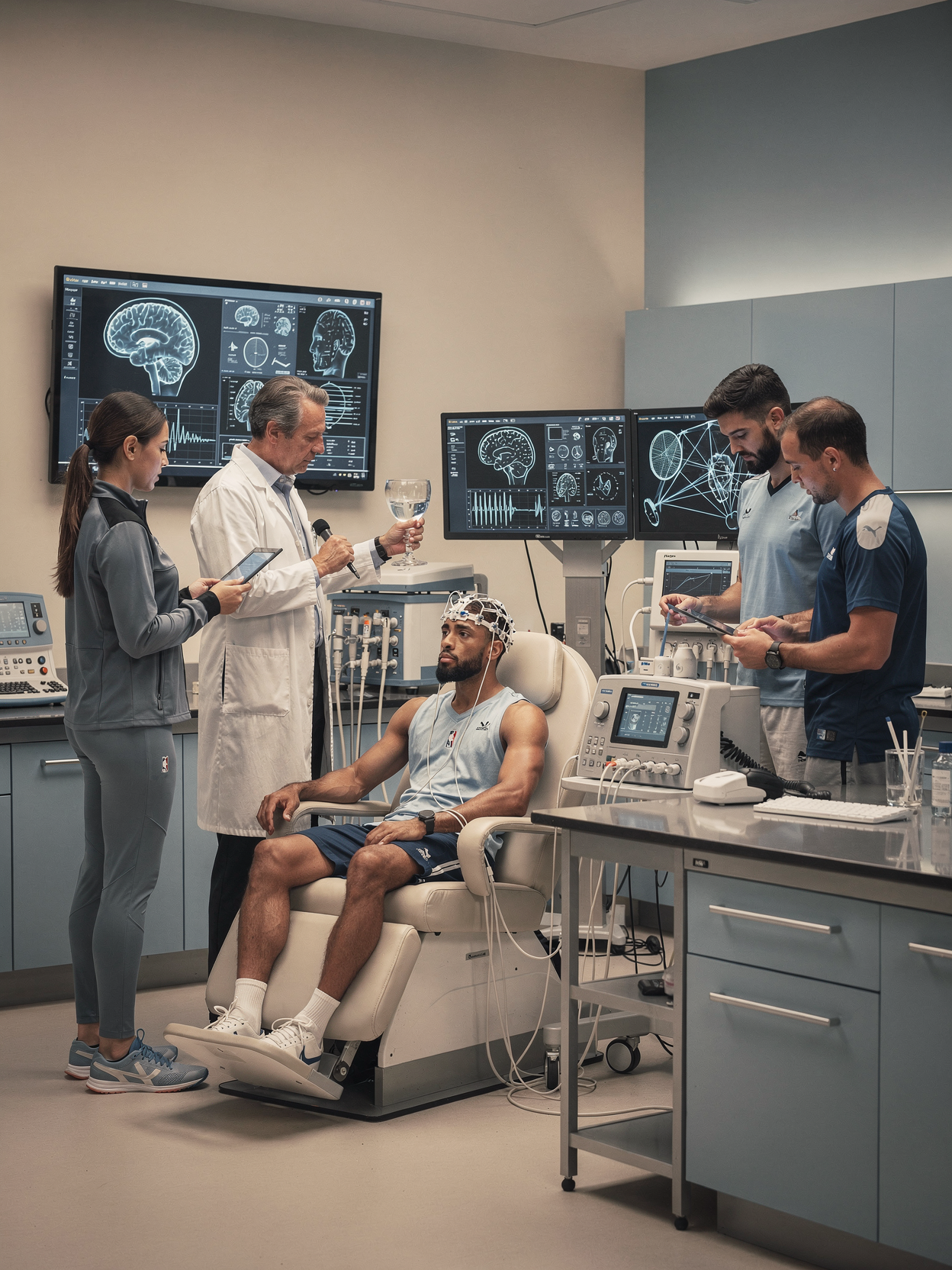
In recent years, neuroscience applied to sport has experienced rapid growth. Techniques such as functional magnetic resonance imaging (fMRI), electroencephalography (EEG), and neuromodulation are increasingly used to investigate the neural mechanisms underlying performance, decision-making, and motor learning. However, when neuroscience research involves athletes—especially elite athletes—it raises unique ethical and methodological challenges that require careful consideration.
This article explores the key ethical issues in sports neuroscience research and highlights why this field demands heightened ethical awareness from researchers and practitioners alike.
A Thought-Provoking Case: When Science Meets Ethics
Consider the following scenario: a research laboratory is studying the neural correlates of rapid decision-making in professional soccer players. During an fMRI scan, researchers identify a small structural brain anomaly in a 23-year-old athlete, potentially consistent with a cavernous angioma. The athlete is asymptomatic, and the finding is entirely incidental.
This discovery immediately raises critical questions:
- Do researchers have an obligation to disclose this finding?
- Who should communicate it: the principal investigator, a neurologist, or a sports physician?
- How might this information affect the athlete’s career?
- What are the legal and insurance implications?
This case illustrates the ethical complexity of neuroscience research in sport, where scientific, clinical, professional, and economic dimensions intersect.
Why Ethics in Sports Neuroscience Is Unique
Neuroscience research in sport differs from other areas of human research in several important ways.
1. Athletes as a Special Population
Elite athletes constitute a unique population characterized by:
- Extreme competitive pressure
- Short professional career windows
- Power asymmetries involving coaches, teams, federations, and sponsors
- Economic vulnerability closely tied to performance outcomes
In such environments, voluntariness and informed consent may be compromised by external pressures, making enhanced ethical safeguards essential.
2. The Sensitive Nature of Neuroimaging Data
Neuroimaging technologies access the most intimate aspects of a person: the brain. This presents several ethical risks:
- The possibility of incidental findings unrelated to the research aims
- Complex interpretation of data often perceived as “objective” or definitive
- Potential stigmatization if findings are misunderstood or misused
Responsible handling of neurophysiological data requires not only technical expertise but also ethical judgment and clear communication.
3. Multiple Stakeholders and Competing Interests
Unlike many research contexts, sports neuroscience involves a wide range of stakeholders:
- The athlete (the primary research participant)
- Teams and federations, often acting as funders
- Commercial sponsors
- Media and the general public
- The scientific community
- Anti-doping and regulatory bodies
This multiplicity of interests increases the risk of conflicts and underscores the importance of clearly defining data ownership, access, and disclosure boundaries.
Risks of Misuse in Sports Neuroscience
Another major ethical concern is the potential misuse of neuroscientific knowledge, including:
- Selection or exclusion of athletes based on presumed “neural profiles”
- Unregulated forms of neuroenhancement
- Coercive pressure to use neuromodulation techniques (e.g., tDCS)
- Neurosurveillance by sports organizations.
Without a robust ethical framework, neuroscience risks shifting from a tool for understanding human performance to a mechanism of control.
Conclusion
Neuroscience research with athletes offers powerful opportunities to advance knowledge and improve performance, but it also carries significant ethical responsibilities. Designing ethically sound studies, managing sensitive data responsibly, and communicating transparently with athletes and stakeholders are not optional—they are essential.
In a domain where the boundaries between science, health, and professional careers are particularly fragile, ethics becomes the true playing field on which the integrity of sports neuroscience is tested.